Work Time


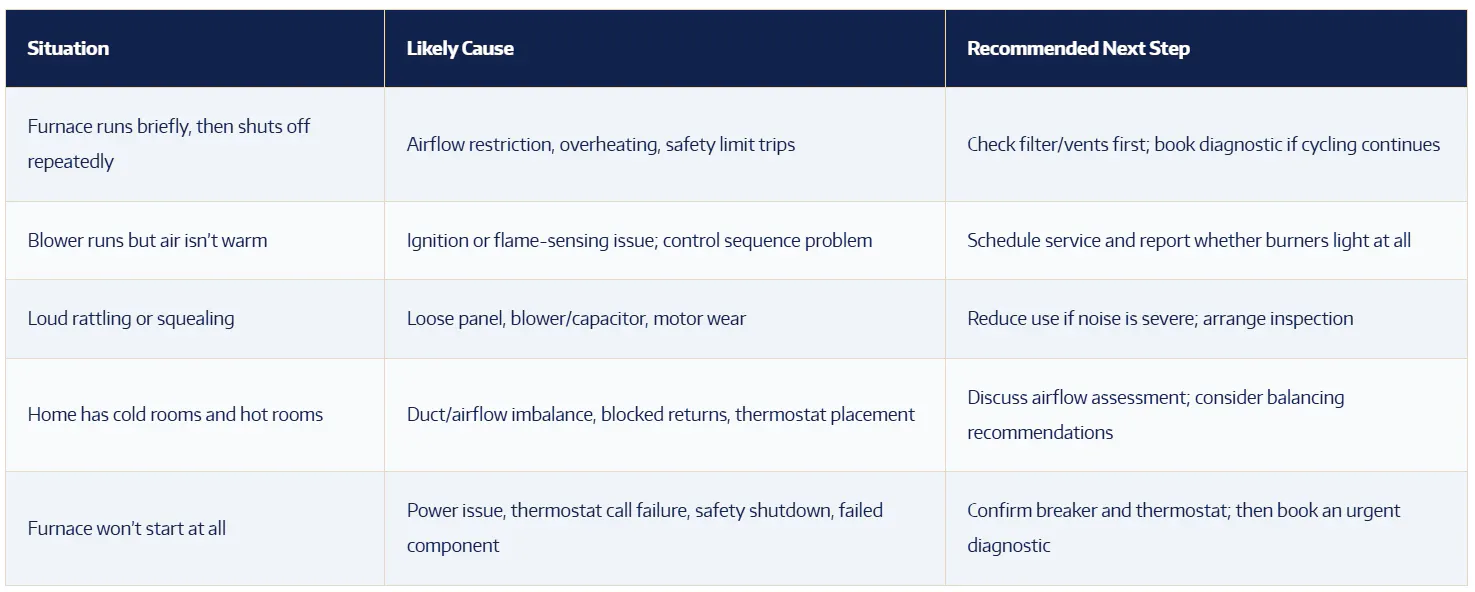
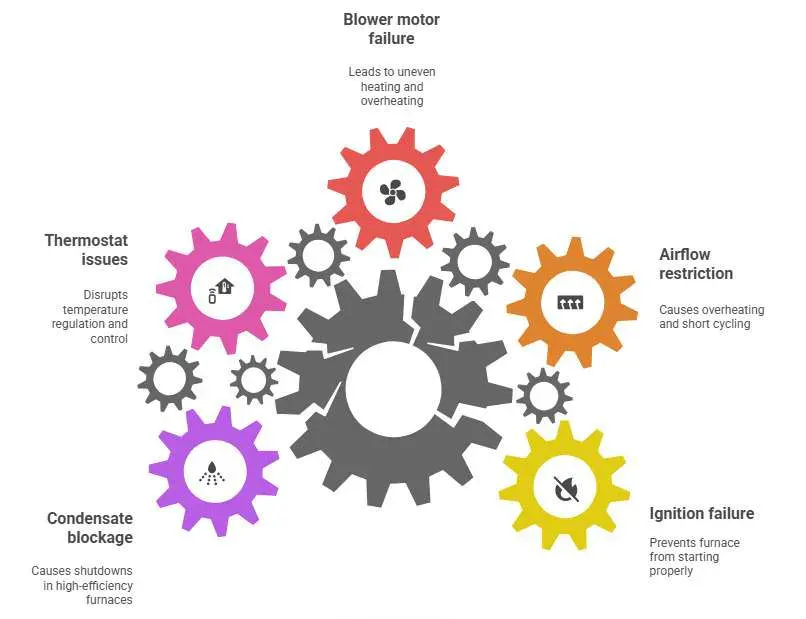
If your furnace tries to start, clicks or hums, then shuts down, ignition-related components are often involved. A failing igniter, a dirty flame sensor, or a draft/pressure issue can interrupt the ignition sequence. These problems may present as intermittent heat, especially during very cold weather when the system is under higher demand.
Restricted airflow is a major cause of short cycling and limit switch trips. Common culprits include a clogged filter, closed supply vents, blocked returns, or issues inside the blower compartment. Sometimes the “repair” is not a new part at all; it’s correcting airflow conditions and confirming the furnace is operating within its expected temperature rise.
When the blower doesn’t move air effectively, the house won’t heat evenly, and the furnace may overheat and shut down. A weak capacitor can cause slow starts, humming, or inconsistent blower performance. Motor issues can manifest as squealing, grinding, or airflow-related error codes.
Thermostats can fail, wiring can loosen, and smart thermostat setups can introduce configuration problems. Control boards can also develop faults, but good technicians typically confirm simpler causes first (power, grounding, call-for-heat signals, and sensor behaviour) before concluding a board needs replacement.
High-efficiency furnaces produce condensate, and Scarborough winters can create tricky conditions if drains are restricted or venting is ice-related. A partially blocked condensate line can prevent a furnace from running, often presenting as intermittent shutdowns.
In many cases, the most helpful thing you can do as a homeowner is describe the pattern: what you hear, when it happens, and whether it correlates with outdoor temperature or certain thermostat settings.
Scarborough homeowners are eligible for rebates or incentives to reduce the costs of improving their home heating efficiency. This is most common when upgrading high-efficiency equipment or making other home energy upgrades. Before making any decisions, it is best to check the current status of programs and eligibility. Many rebates require specific requirements, such as completing an energy assessment, selecting qualifying equipment, or hiring a professional to install the system. Even if you’re starting with a repair, it can be helpful to ask whether your furnace’s age and condition make an efficiency upgrade worth considering, especially if you’re already facing frequent breakdowns or rising heating costs.
Most homes benefit from an annual check, ideally before cold weather arrives. If you’ve had intermittent issues or your home has dust/pet hair, you may need more frequent filter attention and occasional mid-season checks.
It can indicate an ignition problem, a control issue, or a situation where the blower is running but the burners aren’t staying lit. It can also happen during certain startup sequences, but persistent lukewarm airflow needs diagnosis.
Leave the area, avoid turning electrical switches on or off, and follow your local utility’s emergency guidance. Once it’s safe, arrange a professional inspection.
Common causes include overheating from restricted airflow, thermostat problems, sensor faults, or safety controls tripping. Short cycling should be addressed promptly because it can increase wear and reduce comfort.
No. Loud bangs can point to ignition timing issues, delayed ignition, duct expansion, or other concerns. Because some causes can be safety-related, it’s worth booking the service.
Uneven heating often relates to airflow balance, blocked returns, closed vents, duct leakage, or thermostat placement. Furnace performance and duct distribution work together, so the fix may not be inside the furnace alone.
Straightforward problems may be resolved in under an hour, while intermittent faults or airflow/venting issues can take longer to confirm and correct safely.
If it’s a minor rattle, you may be able to keep the heat on temporarily, but any grinding, squealing, burning smell, or repeated shutdowns are signs to stop and schedule service, especially in older systems.
Have your thermostat setting, any error code displayed, the brand/model if available, and a clear description of what’s happening (when it started, how often it occurs, and any sounds or smells).
Yes. Severe airflow restriction can trigger overheating and safety shutdowns, creating a “no heat” condition even when the furnace itself may not have a failed part.