

WELCOME TO CONSTANT
Work Time1 (888) 675-5907
Furnace Repair Company in Toronto
Table of Contents
Key Takeaways - Introduction - When to Call for Furnace Repair: Early Warning Signs - How a Service Call Works: What Technicians Check - Common Furnace Problems and Typical Repairs - Common Furnace Brands Sold in Toronto (and What to Know) - Brand Comparison Table (Ontario Market) - Cost Ranges in Toronto: What Furnace Repair Can Cost - Maintenance Habits That Reduce Breakdowns - FAQ: Furnace Repair in Toronto If your furnace stops working in the middle of the night or during a cold Toronto morning, you shouldn’t be stuck waiting days for help. When heat goes out, comfort and safety become urgent. That’s why we answer the phone late at night and early in the morning, and we can dispatch a licensed technician the same day or arrange a next-day furnace installation when replacement is the best option. Many homeowners delay replacing an aging furnace because rebates feel complicated. We remove that barrier entirely. We help you choose a high-efficiency furnace that qualifies for available Ontario rebates, and we take care of all rebate forms and submissions on your behalf. You get the savings without the paperwork, confusion, or missed deadlines.
Need service? Call now 1 (888) 675 5907
Competitive Pricing with 0% Financing Options Replacing a furnace doesn’t need to strain your finances. We offer competitive pricing and flexible financing options, including plans with 0% down and 0% interest for qualified homeowners. This allows you to restore heat immediately while spreading payments over time, without upfront pressure.
Key Takeaways
- A few early symptoms (short cycling, odd smells, and uneven heating) often signal a need for repair before a full breakdown. - A proper diagnostic visit should include airflow, venting, ignition, and safety-control checks, not just a quick parts swap. - Toronto homes commonly use a mix of brand families (Carrier/Bryant/ICP, Lennox, Trane/American Standard, Goodman/Amana, Rheem/Ruud, and others), which can affect parts and configuration. - Furnace repair costs in Toronto are best understood as ranges, with after-hours calls, part complexity, and airflow/venting issues typically raising the price. - Simple habits (filter changes, clear vents, and pre-season checkups) reduce mid-winter no-heat calls. Toronto winters don’t leave much room for heating surprises. When your furnace starts acting up, cycling on and off, blowing lukewarm air, or making new noises, the right next step is usually a professional assessment that prioritizes safety, clear communication, and a practical fix. Working with a trusted furnace repair company in Toronto helps you get from “something’s off” to “heat is stable again” with fewer repeat issues, especially when the problem involves airflow restrictions, ignition faults, or venting concerns that aren’t obvious at first glance
When to Call for Furnace Repair: Early Warning Signs
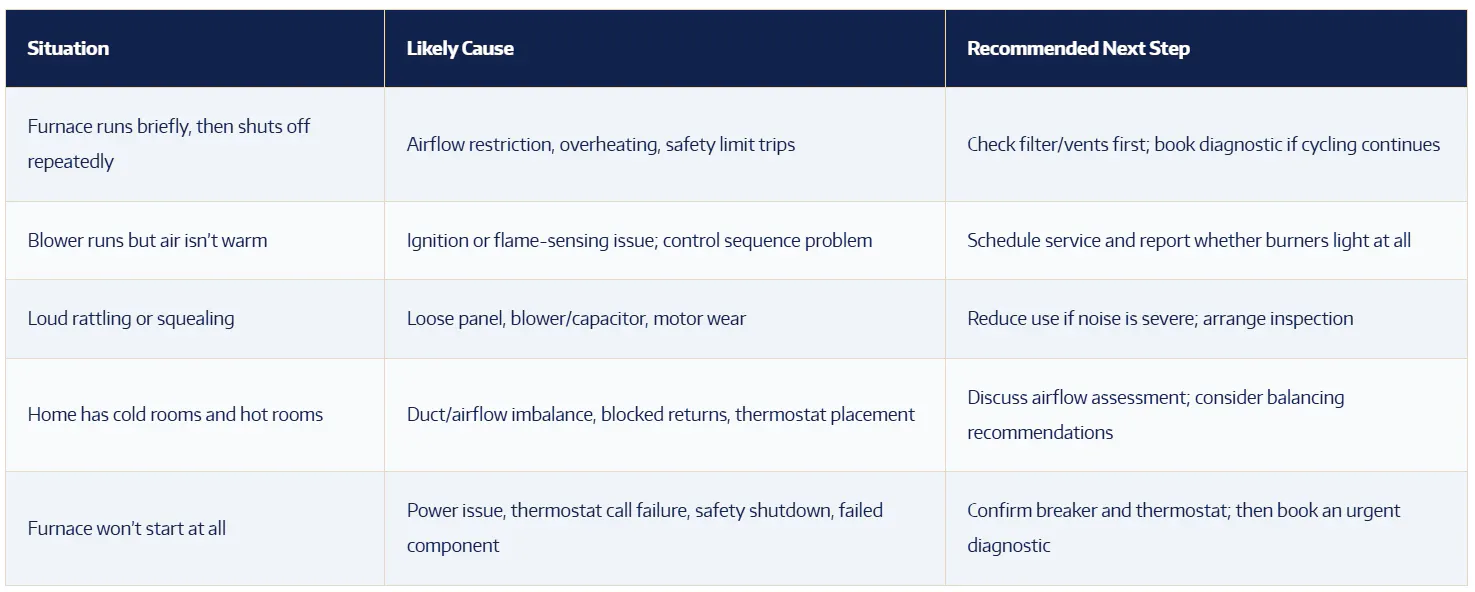
Most furnace failures are not a result of a sudden event. The furnace will give you clues as they progress. Early detection of these clues can help prevent the furnace from completely losing heat during the coldest part of the winter. Short cycling is one of the first signs. Your furnace will turn on, run briefly, and then shut off. It can be due to overheating, a thermostat problem or a safety device doing its job. Uneven heat in the home is another common warning sign: Some rooms are comfortable, while others remain chilly despite the thermostat being set to normal. It’s not just about the looks. It’s normal to have a faint dusty scent at the beginning of the season, but anything that smells like exhaust, burning or “electrical” odours should be taken seriously. If you smell gas, leave the area and consult your local utility before calling for service. A few “don’t ignore these” symptoms include: - New rattling, buzzing, squealing, or banging sounds during startup or operation - The furnace runs constantly, but the home still feels cold - The thermostat setting keeps creeping upward to maintain comfort - A sudden jump in heating costs without a clear reason - The furnace shuts down and needs frequent resetting If you’re noticing one or more of these, it’s often cheaper and simpler to schedule service before the issue becomes a no-heat emergency
How a Service Call Works: What Technicians Check
A thorough service call is part detective work and part safety inspection. The goal isn’t just to get the furnace running in the moment; it’s to find the underlying cause so the problem doesn’t repeat next week. A reputable technician typically starts by asking a few focused questions: When did the issue begin? Does it happen at certain outdoor temperatures? Is the thermostat behaving normally? Has any work been done recently (filters, renovations, duct changes, smart thermostat installation)? Those answers help narrow down whether the issue is likely airflow-related, ignition-related, control-related, or something else. From there, a proper inspection usually includes: - Filter condition and airflow checks (including supply/return considerations) - Thermostat signals and furnace control-board behaviour - Ignition sequence (hot surface igniter or spark) and flame sensing - Blower operation (motor, capacitor, speed settings) - Venting/combustion air basics (especially on high-efficiency units) - Safety controls (limit switch, pressure switch, rollout protection, etc.) Homeowners often assume the issue is “the furnace” when the root cause is actually a clogged filter, a blocked return, a failing blower capacitor, or a condensate drain problem on a high-efficiency furnace. This is where choosing a furnace repair company in Toronto that emphasizes diagnosis, rather than guess-and-replace, can save time and prevent repeat calls.
Common Furnace Problems and Typical Repairs
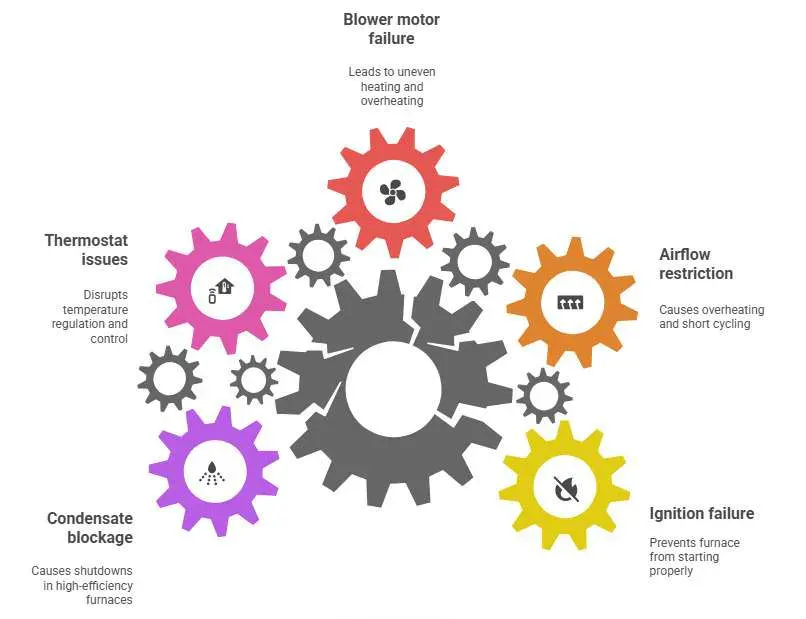
Most residential furnace repairs fall into a handful of patterns. Understanding them helps you communicate symptoms clearly and evaluate recommendations.
Ignition and flame-sensing issues

If your furnace tries to start, clicks or hums, then shuts down, ignition-related components are often involved. A failing igniter, a dirty flame sensor, or a draft/pressure issue can interrupt the ignition sequence. These problems may present as intermittent heat, especially during very cold weather when the system is under higher demand.

Airflow restrictions and overheating

Restricted airflow is a major cause of short cycling and limit switch trips. Common culprits include a clogged filter, closed supply vents, blocked returns, or issues inside the blower compartment. Sometimes the “repair” is not a new part at all; it’s correcting airflow conditions and confirming the furnace is operating within its expected temperature rise.

Blower motor and capacitor problems

When the blower doesn’t move air effectively, the house won’t heat evenly, and the furnace may overheat and shut down. A weak capacitor can cause slow starts, humming, or inconsistent blower performance. Motor issues can manifest as squealing, grinding, or airflow-related error codes.

Thermostat and control issues

Thermostats can fail, wiring can loosen, and smart thermostat setups can introduce configuration problems. Control boards can also develop faults, but good technicians typically confirm simpler causes first (power, grounding, call-for-heat signals, and sensor behaviour) before concluding a board needs replacement.

Condensate and venting issues (high-efficiency furnaces)

High-efficiency furnaces produce condensate, and Toronto winters can create tricky conditions if drains are restricted or venting is ice-related. A partially blocked condensate line can prevent a furnace from running, often presenting as intermittent shutdowns.

In many cases, the most helpful thing you can do as a homeowner is describe the pattern: what you hear, when it happens, and whether it correlates with outdoor temperature or certain thermostat settings.
Common Furnace Brands Sold in Toronto (and What to Know)
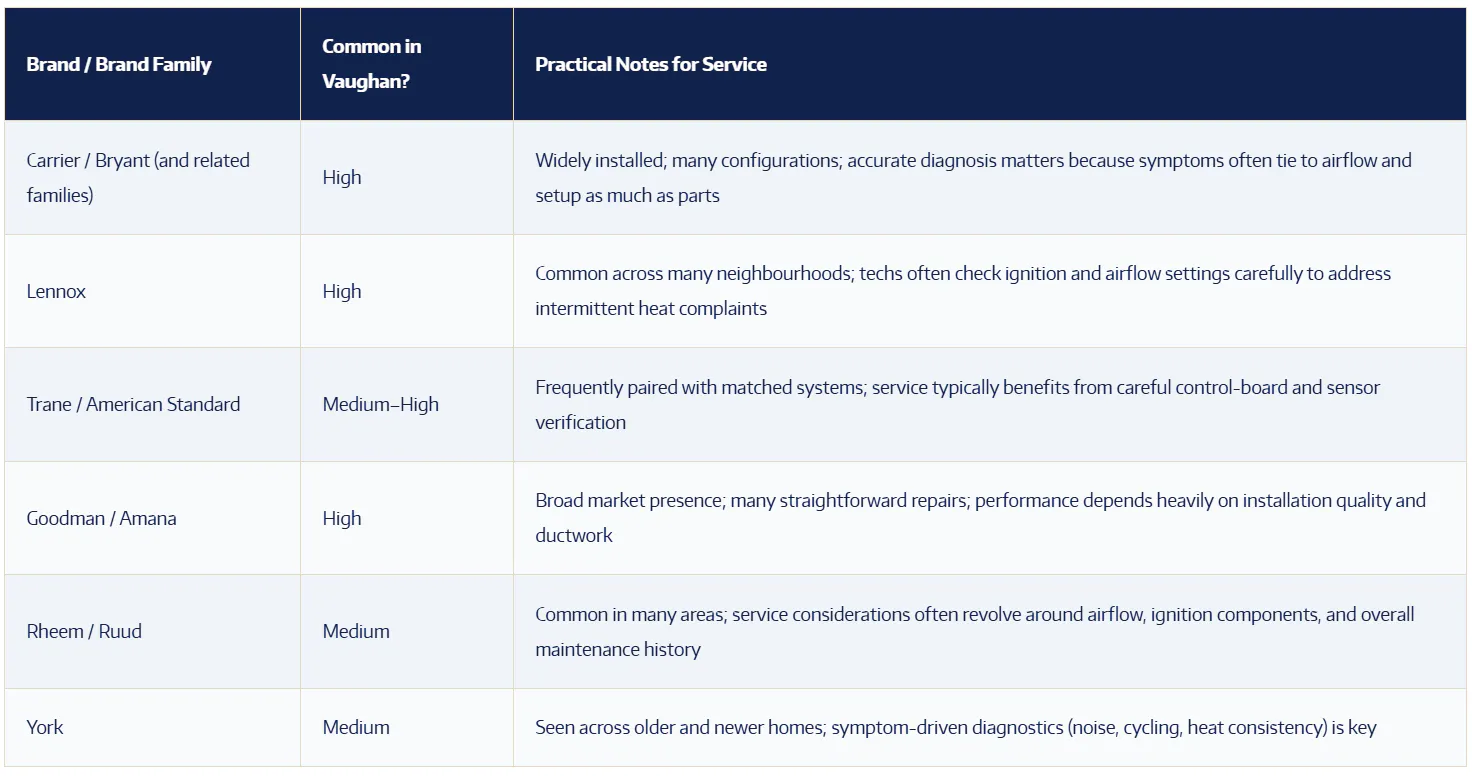
Toronto homeowners encounter a broad mix of furnace brands, and it’s common to see certain “brand families” because multiple labels share manufacturing lines, internal components, or distributor networks. Knowing what you have can help when you’re booking a service and explaining your system. Here are several brands commonly sold and serviced in Toronto homes: - Carrier, Bryant, and many ICP family brands (often seen in various builder installations) - Lennox (common across many neighborhoods, often paired with a matching AC) - Trane and American Standard (frequent in mid- to higher-end installs) - Goodman and Amana (widely available and common in replacements) - Rheem and Ruud (common across many markets) - York (often found in both older and newer homes) - Napoleon (a Canadian name many homeowners recognize; availability varies by dealer) - Keeprite/Tempstar/Heil/Comfortmaker (often grouped with broader family distribution) What matters most from a service perspective isn’t the logo on the front panel, it’s how the unit is configured and maintained. Two furnaces of the same brand can behave very differently depending on ductwork sizing, filter type, venting route, humidity equipment, and thermostat setup. That said, brand familiarity can still make service smoother. A technician who regularly works on the models common in your area is more likely to recognize typical error patterns, know what to check first, and communicate options clearly.
Brand Comparison Table (Ontario Market)
Cost Ranges in Toronto: What Furnace Repair Can Cost
Homeowners understandably want a clear price. The challenge is that “furnace repair” can mean anything from a quick adjustment to a multi-step diagnosis involving airflow, venting, sensors, and replacement parts. In Toronto, furnace repair costs are usually best discussed in ranges, depending on the situation: - Diagnostic / service call range: often in the low hundreds (varies by region, travel time, and season demand) - Minor repairs range: commonly low to mid hundreds when the fix is straightforward, and parts are modest - Moderate repairs range: mid hundreds when parts and labour are more involved (for example, troubleshooting intermittent shutdowns) - Major repairs range: can reach the high hundreds or more if multiple components are affected or if access is difficult What tends to affect the cost most: - Whether it’s an emergency or an after-hours visit - How intermittent the issue is (harder problems take longer to confirm) - The type of furnace (standard vs high-efficiency with condensate/venting complexity) - Access and working conditions (tight mechanical rooms, finished ceilings, etc.) - Whether airflow/duct issues must be addressed before the furnace can run safely A good way to keep costs predictable is to focus on clear symptoms and history when you book. Tell the dispatcher what you’re seeing, whether the furnace runs at all, and if you’ve noticed any error codes, those details can reduce diagnostic time on-site.
Maintenance Habits That Reduce Breakdowns
Furnaces are built for Canadian winters, but they still rely on clean airflow and stable operating conditions. Small, consistent habits make a noticeable difference in comfort and reliability. Start with filtration. A filter that’s too dirty, or the wrong type for your system, can create airflow restriction that leads to overheating and short cycling. If you’re unsure what filter your system should use, ask your technician to confirm the correct size and replacement schedule. Also, pay attention to the basics that quietly cause service calls: - Keep supply vents open and unblocked by furniture or rugs - Make sure return air pathways aren’t obstructed - If you have a high-efficiency furnace, keep outdoor intake/exhaust terminations clear of snow buildup - Listen for changes: new noises often appear before performance drops - Book a pre-season check if your furnace struggled last winter Many homeowners only think about their furnace when it stops working. But if you want fewer surprises, partnering with a furnace repair company in Toronto for periodic checkups can reduce mid-season breakdowns and help catch small issues before they become urgent.
Ontario Rebates and Incentives for Heating Upgrades

Toronto homeowners are eligible for rebates or incentives to reduce the costs of improving their home heating efficiency. This is most common when upgrading high-efficiency equipment or making other home energy upgrades. Before making any decisions, it is best to check the current status of programs and eligibility. Many rebates require specific requirements, such as completing an energy assessment, selecting qualifying equipment, or hiring a professional to install the system. Even if you’re starting with a repair, it can be helpful to ask whether your furnace’s age and condition make an efficiency upgrade worth considering, especially if you’re already facing frequent breakdowns or rising heating costs.

FAQ: Furnace Repair in Toronto
1) How often should I have my furnace serviced in Toronto?

Most homes benefit from an annual check, ideally before cold weather arrives. If you’ve had intermittent issues or your home has dust/pet hair, you may need more frequent filter attention and occasional mid-season checks.

2) My furnace is blowing air, but it’s not warm. What does that mean?

It can indicate an ignition problem, a control issue, or a situation where the blower is running but the burners aren’t staying lit. It can also happen during certain startup sequences, but persistent lukewarm airflow needs diagnosis.

3) What should I do if I smell gas near my furnace?

Leave the area, avoid turning electrical switches on or off, and follow your local utility’s emergency guidance. Once it’s safe, arrange a professional inspection.

4) Why does my furnace keep turning on and off (short cycling)?

Common causes include overheating from restricted airflow, thermostat problems, sensor faults, or safety controls tripping. Short cycling should be addressed promptly because it can increase wear and reduce comfort.

5) Is a banging or booming sound when it starts normal?

No. Loud bangs can point to ignition timing issues, delayed ignition, duct expansion, or other concerns. Because some causes can be safety-related, it’s worth booking the service.

6) Why are some rooms cold even though the furnace seems to run fine?

Uneven heating often relates to airflow balance, blocked returns, closed vents, duct leakage, or thermostat placement. Furnace performance and duct distribution work together, so the fix may not be inside the furnace alone.

7) How long does a typical furnace repair appointment take?

Straightforward problems may be resolved in under an hour, while intermittent faults or airflow/venting issues can take longer to confirm and correct safely.

8) Should I keep running my furnace if it’s making a new noise?

If it’s a minor rattle, you may be able to keep the heat on temporarily, but any grinding, squealing, burning smell, or repeated shutdowns are signs to stop and schedule service, especially in older systems.

9) What information should I have ready when I call for service?

Have your thermostat setting, any error code displayed, the brand/model if available, and a clear description of what’s happening (when it started, how often it occurs, and any sounds or smells).

10) Can a dirty filter really cause a no-heat situation?

Yes. Severe airflow restriction can trigger overheating and safety shutdowns, creating a “no heat” condition even when the furnace itself may not have a failed part.
Constant Home Comfort is built around making home comfort straightforward for Toronto homeowners, whether you need a repair, an urgent no-heat visit, or a full system upgrade. We serve multiple areas of Toronto, and we’re available 24/7 for service and sales. Our team works with industry-leading HVAC brands and focuses on clear, on-the-spot quotes, while helping customers understand and access available rebate opportunities by handling the paperwork so the process feels simpler from start to finish.